Contact the Department of Anthropology
Connect with us
FacebookAnthropology labs
Learn about the lab facilities that our faculty and students conduct their research in.NAU Research
Northern Arizona University is a research-intensive university. Find out what other research is being conducted across campus.Archaeology
Archaeology at NAU focuses on the interdisciplinary understanding of past human lives through the scientific study of material culture and biological remains using applicable theories in archaeology within a broader framework of heritage management. Skills acquired in this emphasis are field, lab, and curatorial methods as they apply to archaeological questions, interpreting the appropriate regulatory context for archaeological projects, and evaluating ethical dilemmas in archaeology.
Learn about the variety of anthropology related projects anthropology faculty and students are participating in.
Field School Opportunities
Research Projects
Northern Gallinazo Archaeological Research Project (PIAGN) Lambayeque, Peru Accordion Closed
The north coast of Peru has been long regarded as one of the primary cultural centers of the ancient Andean civilization of South America. Spanish conquerors of the Inca empire recognized the cultural and economic importance of the region and established their first capital there. The region thus holds a rich multi-cultural heritage and the natural wonders of the arid pacific coast, and the high Andes mountains that culminate in one of the most ecologically and culturally diverse locations on the planet.
Long-term archaeological field research on the pre-Hispanic cultures of the first millennium in the Lambayeque region of northern Peru began in 2010 at the site of Songoy-Cojal (Zaña Valley). The endeavor to understand social and economic relationships that existed over 1000 years ago and persisted despite environmental challenges posed by flooding and drought continue to guide our ongoing fieldwork.
Since 2022, the Northern Gallinazo Archaeological Research Project (PIAGN) has focused on archaeological sites in the La Leche Valley. There, major centers pertaining to various cultural periods came and went over time. In fact, the area lies along a segment of the famed Inka Road System (Qhapaq Ñan in Quechua), which is now a UNESCO World Heritage Site.
What made this area so important and appealing over time? Did mining and water resources play a role in the sustained settlement and success of the area? With whom did the region, and its inhabitants interact? Through the application of innovative computational methods and digital archaeology techniques, PIAGN advances our understanding of first millennium Lambayeque life and culture.
For more project information and volunteer opportunities for undergraduates and graduates, contact Dr. Kayeleigh Sharp in the Digital Archaeology Lab.
Hopi Iconography Project Accordion Closed
At the Museum of Northern Arizona (MNA), Dr. Kelley Hays-Gilpin directs the Hopi Iconography Project, a collaboration between the museum and the Hopi Tribe’s cultural preservation office.
The research is exploring Hopi cultural continuity through pottery, rock art, mural painting, and fiber perishables, including baskets and textiles.
Archaeologists, cultural anthropologists, and art historians are working together with Hopi artists, language specialists, archaeologists, and other cultural specialists to study nearly two thousand years of Hopi history, values, aesthetics, technology, subsistence, and artistic expression.
Archaeologists usually study the past for its own sake, but this project is trying to understand the meanings of the past in the present, and how distinctively Hopi ways of thinking about ecology, health, and community values have been expressed in material culture over centuries if not millennia.
Most important, the research needs to explore ways that Hopi traditions can help shape a sustainable future for Hopi communities and beyond, through subsistence farming, craft production, public health programs, and cultural revitalization.
In some ways, it’s more important to Hays-Gilpin that ancient objects do have significance for contemporary indigenous people, and less important what the exact meanings of ancient symbols are—so it’s less about reading the past like a text, and more about having a conversation in the present about ancestors, sacred places, and making aesthetic and emotional connections between past and present.
It’s about being able to hear messages from the past that help us live better lives today—whether it’s how to grow food in the desert, how to have a healthy diabetes-resistant diet, how to deal with drought, how to continue one’s cultural heritage in new art forms, or how to help outsiders understand and appreciate one’s art heritage.
Thus far, Dr. Hays-Gilpin’s research with project has resulted in four scholarly articles and book chapters and two issues of MNA’s Plateau magazine.
Joann Kealiinohomoku Historic Flagstaff Home Project Accordion Closed
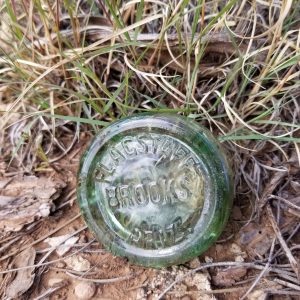
At her home located north of campus, former NAU ethnomusicologist Joann Kealiinohomoku collected historic artifacts from her backyard and donated them to the Anthropology Department upon her retirement. Mostly dating to the 1940s and 1950s, the artifacts reveal evidence of architectural renovations, foodways, consumption, domesticity, and childhood in WWII-era Flagstaff. The project is conducted by Dr. Emily Dale in the Historical Archaeology Lab with the assistance of graduate and undergraduate student volunteers.
Southwest Pottery Traditions Accordion Closed
Dr. Kelley Hays-Gilpin directs traditional archaeological research on pottery traditions in the northern Southwest, in collaboration with our national parks, forests, and other agencies, tribes, and museums.
Graduate student service projects that she has directed include a web-based field identification manual for Pueblo IV period decorated pottery from the Agua Fria National Monument, and analysis of Cohonina pottery from sites excavated near Sitgreaves Mountain by joint MNA-NAU field schools.
Her graduate students are presently preparing a field identification manual, type collection, and additional analysis of pottery from the area north and west of the Colorado River (sometimes called “Virgin Anasazi” or the “Arizona Strip” region). She has authored pottery identification manuals and compiled type collections for Wupatki National Monument, Petrified Forest National Park, and the Navajo Nation’s Chambers-Sanders Trust Lands.
Collectively, her experience with pottery from a wide geographic range and many time periods results in deep understanding of pottery production, distribution, chronology, and cultural affiliation across the northern Southwest/southern Colorado Plateau.
St. Michael’s Mission Outhouse Collection Project Accordion Closed
In the 1970s, NAU archaeology students excavated an outhouse at the turn-of-the-century St. Michael’s Mission in Window Rock, Arizona on the Navajo Nation. The results of the excavation, unfortunately, were not formally written up. The current St. Michael’s Mission Outhouse Collection Project incorporates ethnographic methods with archaeological/collections-based research to learn more about the role of the mission in the past and present. From a socio-cultural anthropological perspective, the project aims to conduct interviews with the participants of the original excavations to fill in the gaps due to the lack of paperwork, and to interview Navajo stakeholders about the role of the mission in the past and the present to provide indigenous context for the artifacts. Archaeologically, the project aims to investigate the roles of refuse disposal, religion, gender, and other cultural aspects in the creation of the assemblage. The project is conducted by Dr. Emily Dale in the Historical Archaeology Lab with the assistance of graduate and undergraduate student volunteers.