NAU, TGen Awarded $2 Million To Study Biodiversity Link to Carbon Cycle
Potential connections between the biodiversity of soil
microorganisms and the carbon cycle will be studied by Northern Arizona University
(NAU) and the Translational Genomics Research Institute (T-Gen) under a $2
million grant from the National Science Foundation (NSF).
“The work will test the idea that biodiversity is a
fundamental driver of the carbon cycle, connecting microbes to the entire Earth
system,” said Bruce Hungate, NAU Professor of Biology and a director in the Merriam-Powell Center for Environmental
Research.
According to Hungate, the project will investigate “a
surprising response” to changes in soil carbon levels: When new carbon enters
the soil, a chain reaction leads to the breakdown of older soil carbon that
otherwise would have remained stable. “Current theory does not explain this
chain reaction,” Hungate said.
The work is important, Hungate added, because soil carbon is
a major reservoir in the global carbon cycle, storing about three times the
amount of carbon contained in the atmosphere as carbon dioxide. Some soil
processes promote carbon storage, locking it away in stable forms, resistant to
decay.
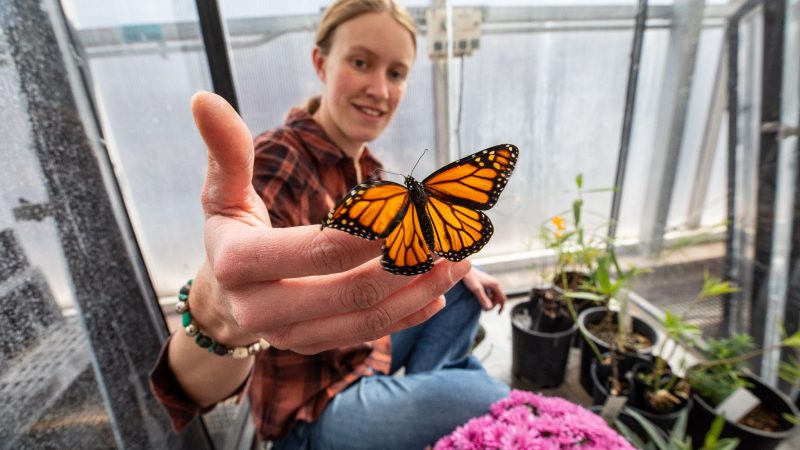
New research will test the idea that biodiversity is a fundamental driver of the carbon cycle. Photo: NAU IDEA Lab
The phenomenon to be addressed has the opposite effect,
converting carbon that was thought to be stable to carbon dioxide and
contributing to the atmospheric pool, amplifying rising carbon dioxide due to
human burning of coal, oil, and gasoline.
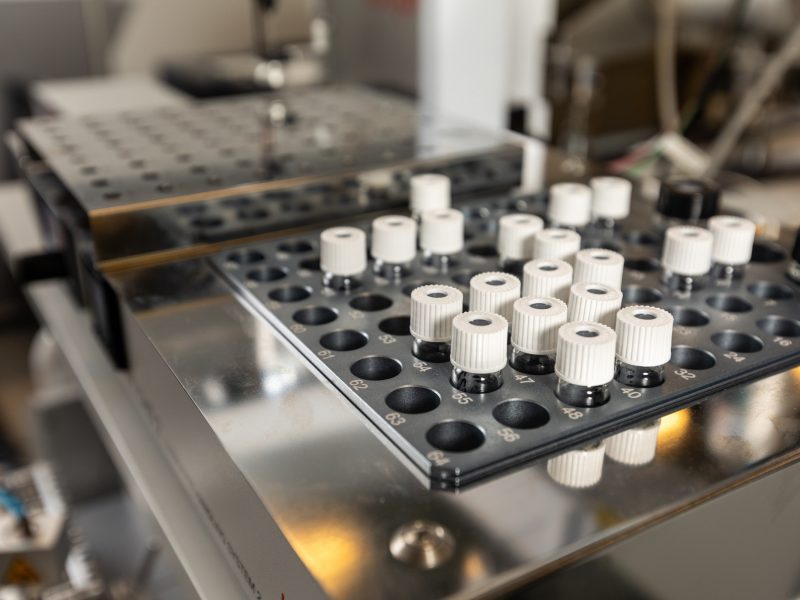
TGen’s role in the project leverages advances in metagenomic
sequencing—spelling out the DNA code of microbial samples from the
environment—made by Lance Price, director of TGen’s Center for Microbiomics and
Human Health, and Cindy M. Liu, a medical doctor and researcher at both TGen and
NAU, who now works for Johns Hopkins University.
“This project is a natural extension of our efforts to
understand how the human microbiome responds to injuries, surgeries, and
chemicals,” Price said. “Here we’re investigating how the planet’s microbiome responds
to excess carbon inputs, which may in turn loop back to negatively affect
public health."
--Courtesy of “Inside
NAU.”